Major Legal Citation Systems in Common Law Jurisdictions
Share
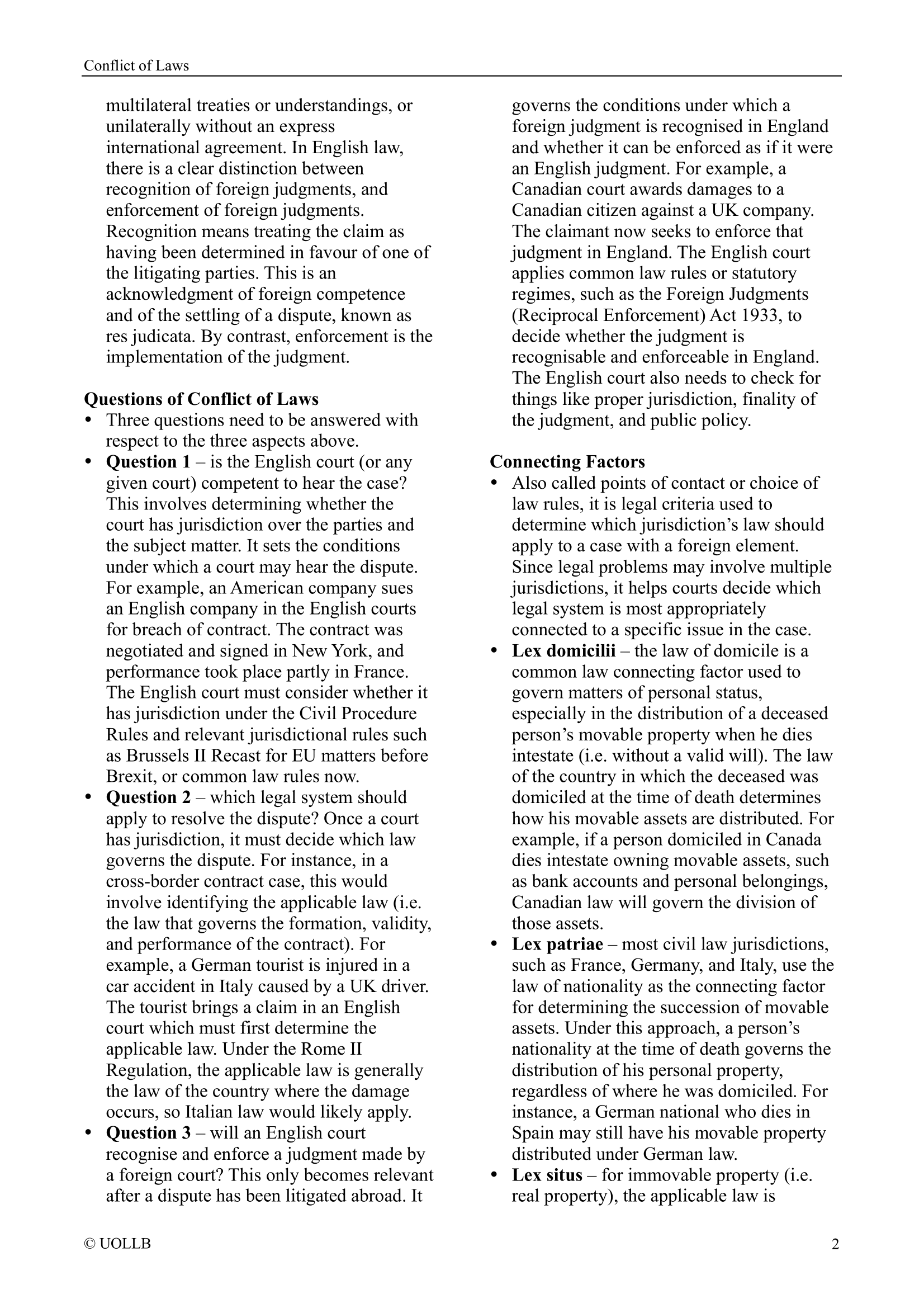
Legal citation serves a crucial role in legal scholarship and practice. It enables readers to identify sources, verify authorities, and understand the foundations of legal arguments. Across the common law world, several major citation systems have emerged to meet the needs of different jurisdictions. Among the most influential are the Bluebook in the United States, the Oxford Standard for Citation of Legal Authorities (OSCOLA) in the United Kingdom, the Australian Guide to Legal Citation (AGLC) in Australia, and the Canadian Guide to Uniform Legal Citation, commonly known as the McGill Guide, in Canada. While all four systems share the objective of promoting consistency and accuracy, they differ significantly in structure, philosophy, and citation conventions.
The Bluebook is the dominant legal citation system in the United States. First published in 1926 by a group of leading American law reviews, it has evolved into an extensive and highly detailed manual that governs citation practices in American legal scholarship, courts, and legal practice. The Bluebook contains hundreds of rules covering judicial decisions, statutes, administrative materials, books, journals, electronic sources, and international materials. Its complexity reflects the diverse and decentralised nature of the American legal system, which includes federal courts, state courts, administrative agencies, and numerous reporting services. As a result, the Bluebook is often regarded as the most comprehensive and technically demanding legal citation guide among the major common law jurisdictions.
OSCOLA occupies a very different position within the legal landscape of the United Kingdom. Developed by the Faculty of Law at the University of Oxford, OSCOLA was designed to create a uniform method of citing legal authorities while maintaining clarity and readability. Unlike the Bluebook, OSCOLA places a strong emphasis on simplicity. Citations are generally presented in footnotes with minimal punctuation, and the system seeks to reduce unnecessary complexity wherever possible. OSCOLA has become the standard citation method in many British law schools, legal journals, and academic publications. Its focus on readability reflects the traditions of British legal scholarship, where concise and unobtrusive references are often preferred.
Australia's AGLC draws inspiration from both the Bluebook and OSCOLA while developing a distinctive Australian approach. Produced by the Melbourne University Law Review Association, the Melbourne Journal of International Law, and the Melbourne Law School, the AGLC is the primary citation guide used in Australian legal academia. The guide is comprehensive and detailed, though generally less complex than the Bluebook. AGLC places significant emphasis on consistency and includes extensive rules for citing Australian legal materials, international law sources, and foreign authorities. Given Australia's active engagement with comparative and international legal scholarship, the AGLC provides detailed guidance for sources beyond domestic law.
Canada's McGill Guide serves as the leading citation authority for Canadian legal writing. Published by students of the Faculty of Law at McGill University, the guide reflects Canada's unique legal environment, which combines common law traditions with the civil law system of Quebec. Consequently, the McGill Guide must accommodate a broader range of legal sources than many other citation systems. It provides detailed instructions for citing legislation, cases, treaties, academic materials, and both common law and civil law authorities. The guide has become the standard reference in Canadian law schools, courts, and legal publications.
One of the most important differences among these citation systems concerns their underlying philosophy. The Bluebook prioritises precision and comprehensiveness, often requiring detailed information and extensive abbreviations. OSCOLA prioritises simplicity and ease of reading, reducing punctuation and abbreviation where possible. The AGLC seeks a balance between comprehensiveness and accessibility, while the McGill Guide focuses on accommodating Canada's mixed legal traditions and bilingual legal culture. These differing priorities influence not only citation formats but also the overall user experience of each guide. As a result, legal writers may find certain systems more intuitive or efficient depending on their jurisdiction and academic context.
The treatment of footnotes also differs. OSCOLA relies heavily on footnotes as the primary vehicle for citations and generally avoids in text references. The Bluebook also uses footnotes extensively in academic writing, but its rules often require more complex citation forms and abbreviations. The AGLC similarly employs footnotes as the standard citation method, while the McGill Guide follows a comparable approach in Canadian legal scholarship. As a result, all four systems favour footnote citation, but the level of detail required in each footnote varies considerably. These differences can affect both the appearance of a document and the amount of time required to prepare citations. For students and researchers, mastering footnote conventions is often an important part of learning legal writing.
Another significant distinction involves abbreviations. The Bluebook contains extensive abbreviation tables covering courts, reporters, geographical locations, periodicals, and institutional names. Mastering these abbreviations is often one of the greatest challenges for students. The McGill Guide also makes substantial use of abbreviations, particularly in relation to Canadian legal sources. By contrast, OSCOLA generally minimises abbreviations except where they are widely recognised. The AGLC falls somewhere between these approaches, using abbreviations where necessary while maintaining a focus on readability. The extent of abbreviation usage can significantly influence how accessible citations appear to readers who are unfamiliar with a particular legal system. It can also affect the learning curve for those encountering a citation guide for the first time.
Jurisdictional orientation further distinguishes these systems. The Bluebook is tailored to the federal and state legal systems of the United States. OSCOLA focuses primarily on the legal sources of the United Kingdom and related jurisdictions. The AGLC is designed around Australian law while incorporating extensive international materials. The McGill Guide addresses the needs of Canadian law, including both common law and civil law traditions. Each guide reflects the structure, institutions, and legal culture of its respective jurisdiction. Consequently, citation practices that seem standard in one country may appear unfamiliar or unnecessary in another. Understanding these jurisdictional differences is particularly important for scholars engaged in comparative legal research.
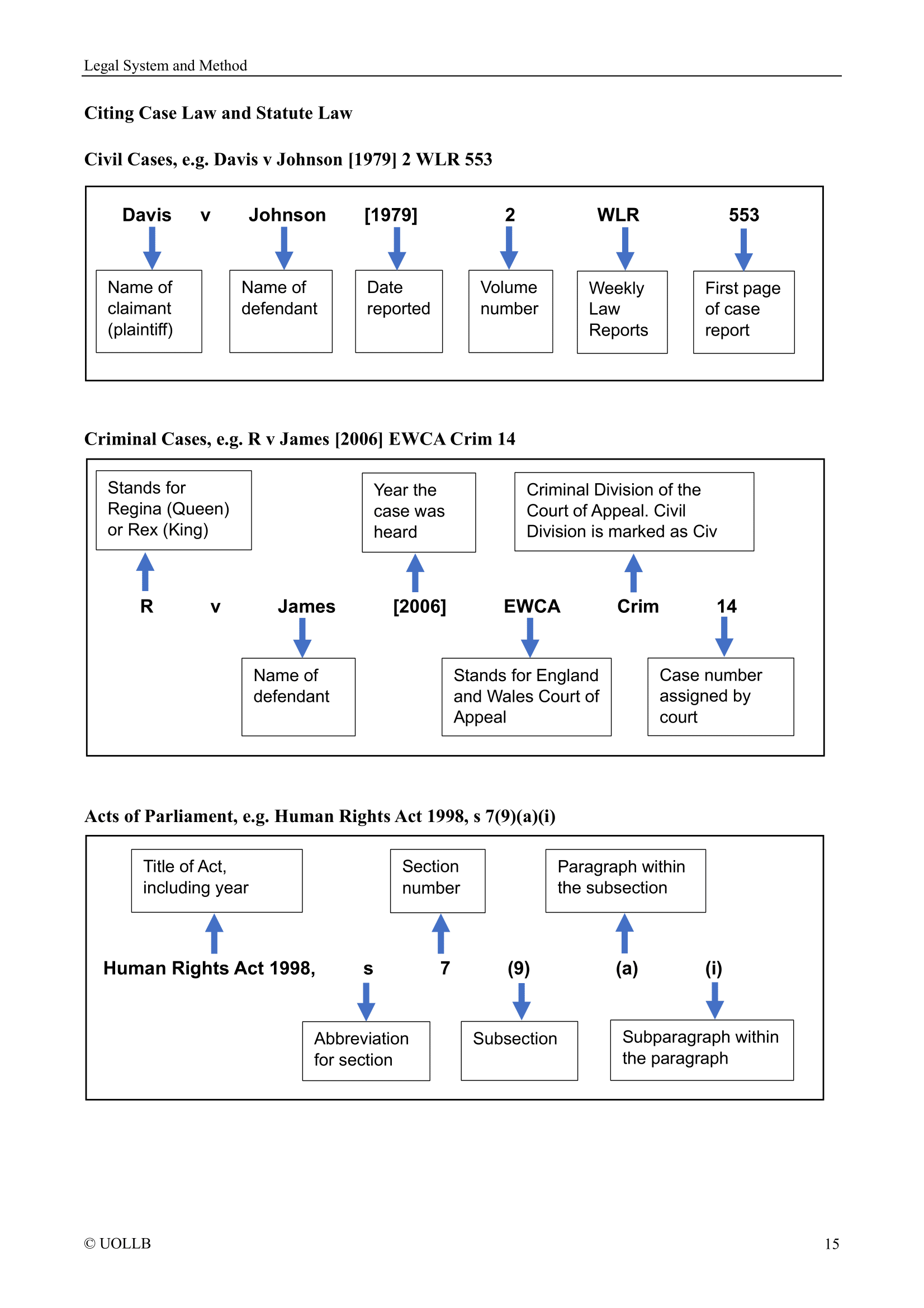
The citation of cases demonstrates these differences in practice. A citation that is considered complete under OSCOLA may omit information that the Bluebook requires. Similarly, the McGill Guide often includes citation elements that reflect Canadian reporting conventions, while the AGLC incorporates formats specific to Australian courts and tribunals. Consequently, legal writers must become familiar not only with citation rules but also with the reporting practices and legal institutions of the jurisdiction in question. Differences in case citation can create challenges when legal materials are used across borders or in comparative studies. They also illustrate how citation systems are shaped by the documentary traditions of their respective legal systems.
Despite their differences, all four citation systems share common goals. They promote accuracy, consistency, transparency, and professional standards in legal writing. Each system seeks to ensure that readers can locate cited authorities efficiently and assess the strength of legal arguments. Their differences arise primarily from variations in legal history, institutional structure, and scholarly traditions rather than from fundamentally different conceptions of citation itself. In this sense, the guides represent different solutions to a common problem rather than competing approaches. Their continued development reflects the evolving needs of legal scholarship and professional practice in their respective jurisdictions.