OSCOLA and Bluebook: Two Worlds of Legal Citation
Share
Legal citation systems are not merely technical formalities. They are the grammar of legal writing, shaping how lawyers, judges, and scholars communicate authority, trace arguments, and engage with the law. Of the many citation systems in use around the world, two stand out as dominant forces: OSCOLA, developed in the United Kingdom, and the Bluebook, which governs legal writing across the United States. Though both serve the same fundamental purpose of providing clear and consistent references to legal sources, they differ significantly in structure, formatting, and jurisdictional focus.
OSCOLA, which stands for the Oxford University Standard for the Citation of Legal Authorities, is the primary legal citation style used in the United Kingdom. It was developed by the Faculty of Law at the University of Oxford and is widely adopted by British universities and legal publications. The Bluebook, formally known as The Bluebook: A Uniform System of Citation, is the dominant citation guide in the United States. It is used by law schools, courts, law reviews, and legal professionals throughout the country.
One of the most noticeable differences between OSCOLA and the Bluebook is their approach to footnotes. OSCOLA uses footnotes as the primary method of citation and generally avoids placing citations within the text itself. This creates a cleaner reading experience because references appear at the bottom of the page rather than interrupting the flow of the main discussion. The Bluebook also permits footnote citations, particularly in law review articles, but it contains more detailed rules for both footnotes and textual citations, depending on the type of publication.
Another important distinction is the level of complexity. OSCOLA is often regarded as more straightforward and user friendly. Its rules are relatively concise, and it emphasises consistency and simplicity. The Bluebook, by contrast, is known for its extensive and highly detailed rules. It contains numerous citation formats, abbreviations, and special conventions that vary according to the source being cited. As a result, many students find the Bluebook more challenging to master.
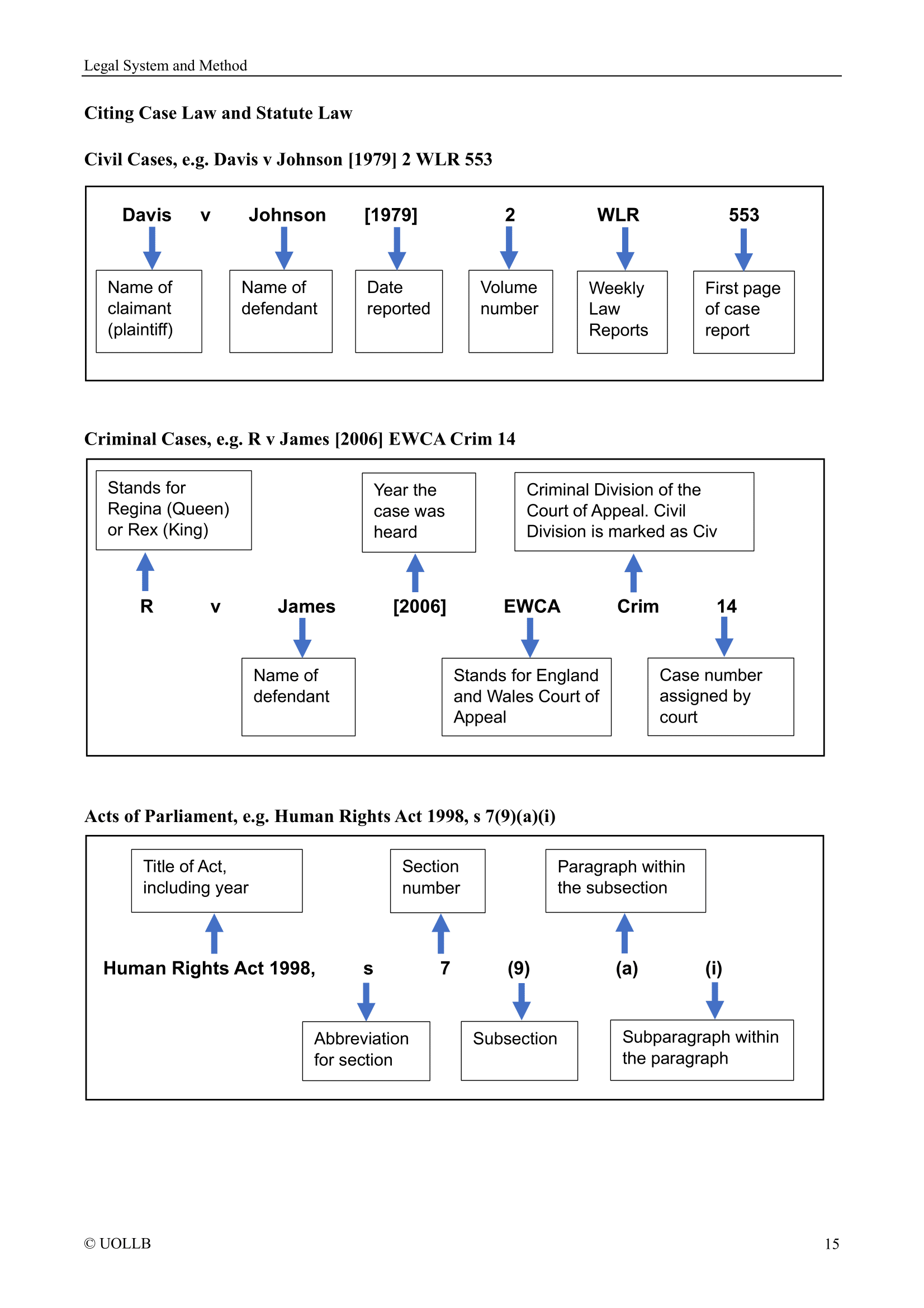
The formatting of case citations also differs significantly. In OSCOLA, case names are generally italicised, and the citation focuses on the law report where the case can be found. For example, a United Kingdom case citation may include the year, volume number, report series, and page number. The Bluebook follows American legal citation conventions, which often include the names of the parties, the volume number, the abbreviated reporter name, the first page of the case, and the court and year information in parentheses when required.
The treatment of secondary sources such as books and journal articles also reflects different citation philosophies. OSCOLA typically presents bibliographic information in a straightforward format that minimises punctuation. The Bluebook employs a greater number of abbreviations and formatting rules. Titles, publication details, and author names may be presented differently, and extensive abbreviation tables are used throughout the system.
Bibliographies provide another area of contrast. OSCOLA generally requires both footnotes and a bibliography in academic work, although some institutions may have specific requirements. The bibliography lists all sources consulted and is organised alphabetically by author surname. In Bluebook legal writing, particularly in law review articles, a separate bibliography is often unnecessary because complete citation information is provided in the footnotes.
Jurisdictional focus is perhaps the most fundamental difference between the two systems. OSCOLA is designed primarily for the legal sources of England and Wales, as well as other jurisdictions influenced by the British legal tradition. The Bluebook is tailored to the United States legal system and includes detailed guidance for citing federal and state authorities. Consequently, each system reflects the structure and reporting practices of its respective legal framework.
| Comparison Area | OSCOLA | Bluebook |
|---|---|---|
| Full Name | Oxford University Standard for the Citation of Legal Authorities (OSCOLA) | The Bluebook: A Uniform System of Citation |
| Primary Jurisdiction | United Kingdom, particularly England and Wales, and jurisdictions influenced by the British legal tradition. | United States, covering both federal and state legal authorities. |
| Main Users | UK universities, legal practitioners, and academic publications. | US law schools, courts, law reviews, and legal professionals. |
| Citation Method | Primarily uses footnotes, keeping citations separate from the main text. | Uses both footnotes and textual citations, depending on the publication and context. |
| Complexity | Relatively simple, concise, and designed for consistency and ease of use. | Highly detailed with extensive rules, abbreviations, and specialised citation formats. |
| Case Citation Format | Case names are italicised, with emphasis on the relevant law report, year, volume, report series, and page number. | Includes party names, volume number, abbreviated reporter, first page, and court and year information where required. |
| Secondary Sources | Uses a straightforward format with minimal punctuation for books and journal articles. | Relies heavily on abbreviations and detailed formatting rules for authors, titles, and publication details. |
| Bibliography | Generally requires both footnotes and an alphabetical bibliography in academic work. | Often does not require a separate bibliography, as full citation details are usually provided in footnotes. |
| Overall Focus | Prioritises simplicity, readability, and consistency in legal citation. | Provides comprehensive guidance for the diverse range of legal authorities within the US legal system. |