Top 10 Cases Decided by Lord Bingham
Share
Lord Bingham of Cornhill (1933–2010) was one of the most influential British judges of modern times. He served as Master of the Rolls, Lord Chief Justice of England and Wales, and Senior Law Lord. His judgments made significant contributions to constitutional law, human rights, criminal procedure, judicial review and the rule of law.
We have selected 10 particularly important cases associated with his judicial decisions, selected for their legal significance and relevance to English law students.
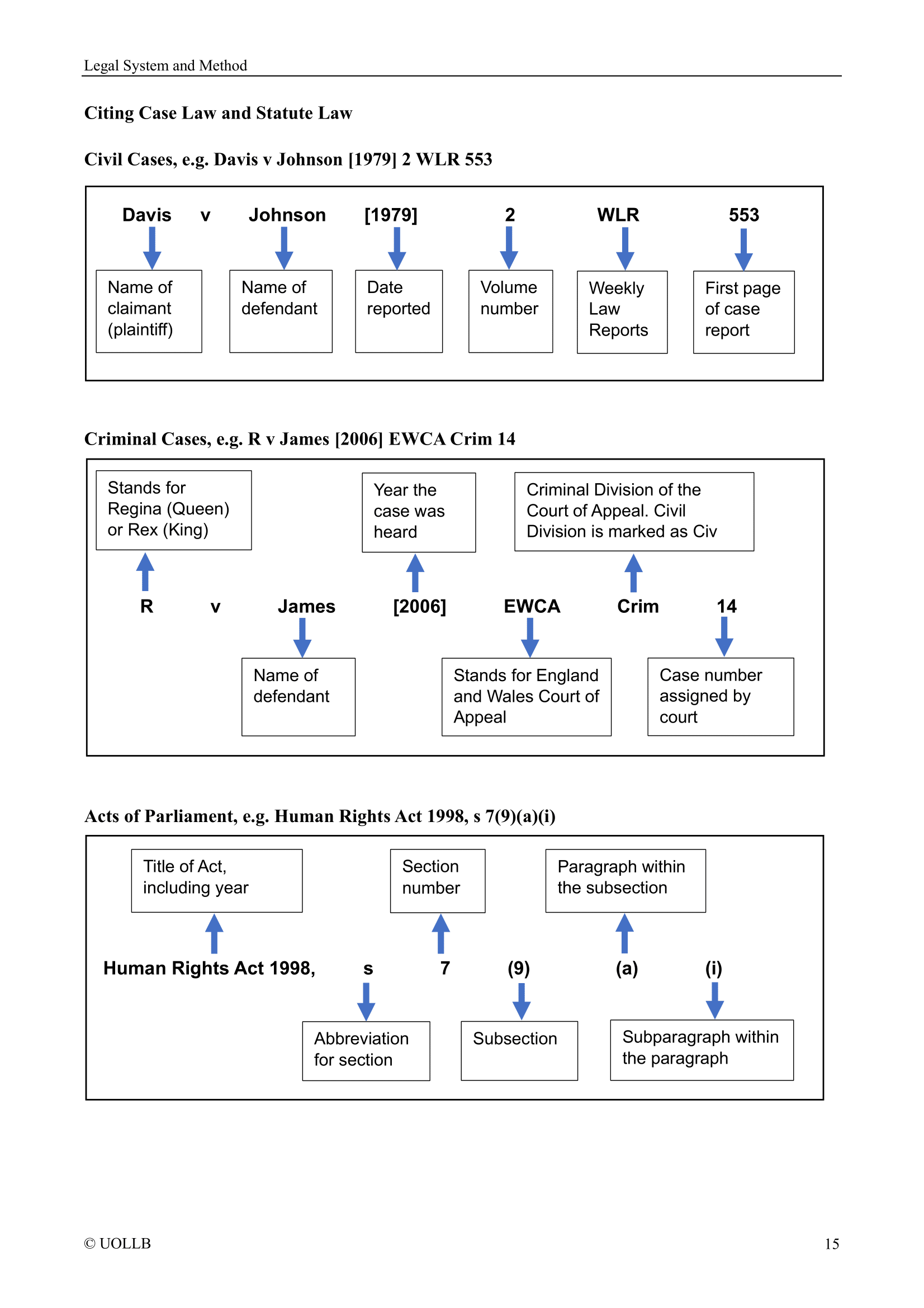
1. A v Secretary of State for the Home Department [2004] UKHL 56
Following the September 11 terrorist attacks in 2001, the UK government introduced legislation allowing the indefinite detention without charge or trial of certain foreign nationals suspected of involvement in international terrorism. Several detainees challenged the legality of their detention at Belmarsh prison.
Lord Bingham delivered the leading judgment in the House of Lords. He concluded that the government's derogation from Article 5 of the European Convention on Human Rights was not strictly required by the exigencies of the situation. The detention arrangements also discriminated unjustifiably against foreign nationals because British nationals suspected of similar activities were not subject to the same restrictions.
The House of Lords held that the detention regime was incompatible with the Convention. The case is a landmark authority on human rights, proportionality, discrimination and the limits of executive power in the context of national security. This case is commonly known as the Belmarsh case.
2. A and others v Secretary of State for the Home Department (No 2) [2005] UKHL 71
The government sought to rely on evidence that might have been obtained through torture by foreign officials without the involvement of British authorities. The issue was whether such evidence could be admitted in proceedings before the Special Immigration Appeals Commission.
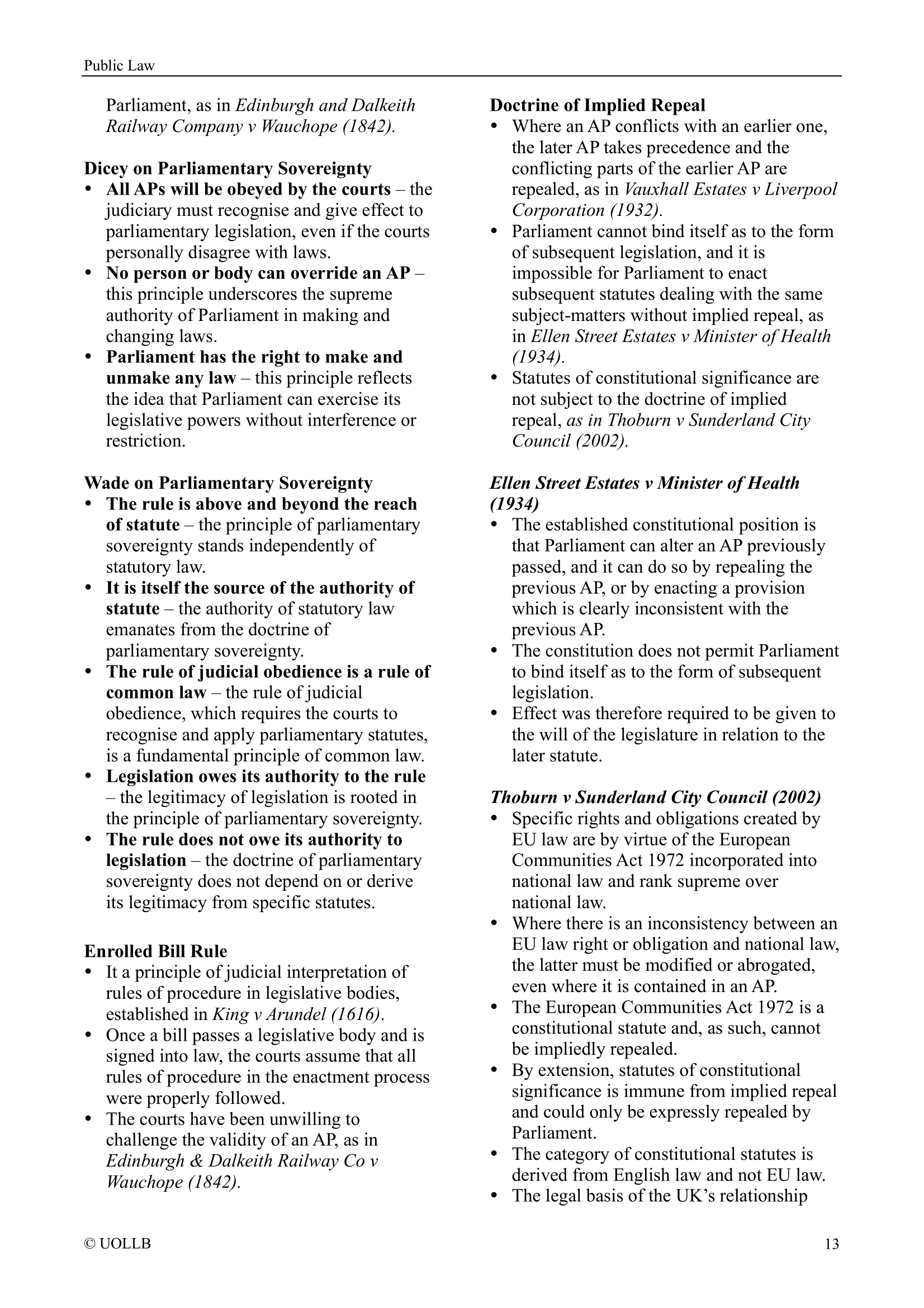
Lord Bingham delivered the leading judgment. He held that evidence obtained through torture was inadmissible, regardless of whether the torture had been inflicted by foreign officials or British authorities.
The case established an important principle that evidence obtained through torture cannot be admitted in judicial proceedings. It reinforced the absolute prohibition against torture and the importance of judicial integrity and the rule of law.
3. R (Daly) v Secretary of State for the Home Department [2001] UKHL 26
Prison authorities introduced a policy allowing prison officers to search prisoners' cells while prisoners were absent. The policy required prisoners to be excluded from their cells during searches, including when legally privileged correspondence was present.
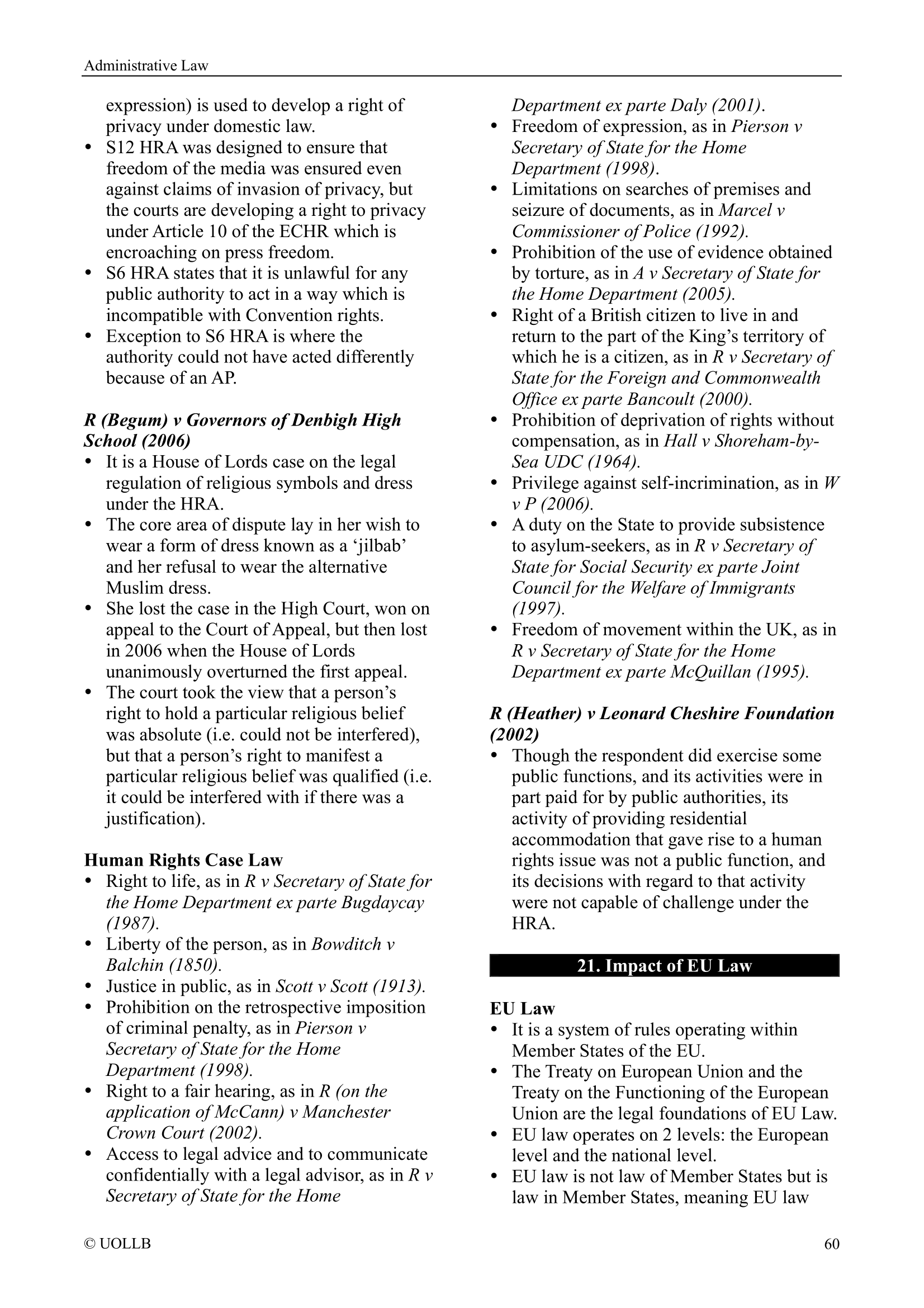
Lord Bingham agreed that the policy was unlawful insofar as it interfered disproportionately with prisoners' rights to confidential communication with their legal advisers.
The case is a leading authority on proportionality in judicial review. Lord Bingham's judgment is particularly important for explaining the relationship between proportionality and the traditional grounds of judicial review, including irrationality. This case demonstrates that prisoners retain fundamental legal rights despite their imprisonment.
4. R (Ullah) v Special Adjudicator [2004] UKHL 26
Two individuals facing removal from the United Kingdom argued that their removal would interfere with their rights under Article 9 of the European Convention on Human Rights, concerning freedom of thought, conscience and religion.
Lord Bingham explained that domestic courts should generally follow clear and consistent Strasbourg jurisprudence when interpreting Convention rights under the Human Rights Act 1998.
He articulated what became known as the Ullah principle, often summarised as the domestic courts should keep pace with Strasbourg jurisprudence, no more but certainly no less.
The case is an important authority on the relationship between UK courts and the European Court of Human Rights. It also illustrates the approach to interpreting Convention rights under the Human Rights Act 1998.
5. R v G [2003] UKHL 50
Two boys, aged 11 and 12, entered the yard of a Co-operative shop and set fire to newspapers. The fire spread and caused substantial damage to the shop and neighbouring buildings. They were convicted of criminal damage on the basis of the objective test of recklessness established in R v Caldwell [1982].
Lord Bingham delivered the leading judgment. The House of Lords allowed the appeal and overruled Caldwell. He held that recklessness required the defendant to have been aware of the relevant risk and to have acted unreasonably in taking that risk.
The case restored the subjective test of recklessness in criminal damage. It is a leading authority on mens rea and demonstrates the importance of considering the defendant's actual state of mind when determining criminal liability.
6. R v Anderson [2002] UKHL 46
Anthony Anderson had been convicted of two murders. The trial judge recommended a minimum sentence of 15 years, but the Home Secretary increased the tariff to 20 years. Anderson challenged the Home Secretary's authority to determine the minimum period of imprisonment.
Lord Bingham delivered the leading judgment. The House of Lords held that the Home Secretary's power to determine the punitive tariff was incompatible with Article 6(1) of the European Convention on Human Rights because sentencing must be determined by an independent and impartial tribunal.
The case established that the executive cannot exercise a judicial sentencing function in a manner incompatible with the right to a fair trial. It is an important authority on judicial independence and the separation of powers.
7. Fairchild v Glenhaven Funeral Services Ltd [2002] UKHL 22
Several employees had been exposed to asbestos while working for different employers. They subsequently developed mesothelioma, a disease caused by asbestos exposure. However, medical science could not establish which particular employer's breach of duty had caused the disease.
Lord Bingham delivered the leading speech. The House of Lords held that where an employer had materially increased the risk of the claimant developing mesothelioma through negligent exposure to asbestos, that could satisfy the causation requirement.
The case established an important exception to the conventional but for test of causation in negligence. It is a landmark authority on causation, particularly where scientific uncertainty makes it impossible to identify the precise source of the injury.
8. Lubbe v Cape plc [2000] UKHL 41
Former employees of a South African subsidiary of Cape plc brought claims alleging exposure to asbestos and inadequate protection against the resulting health risks. They sought to pursue proceedings against the English parent company in England.
Lord Bingham delivered the leading speech. The House of Lords allowed the appeal against the stay of the English proceedings, concluding that there was a real risk that substantial justice could not be obtained in South Africa.
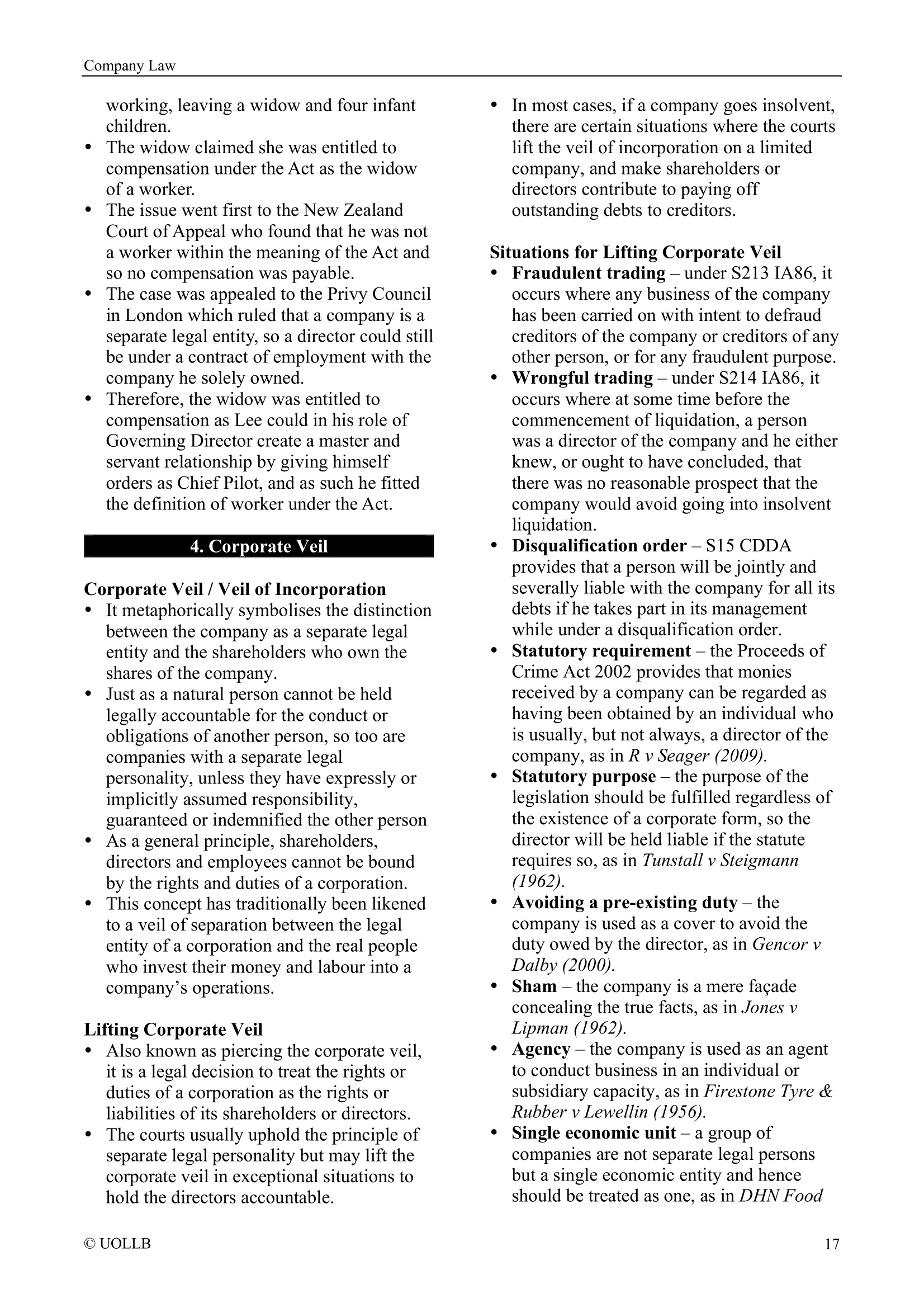
The case is important for multinational corporate liability and jurisdiction. It also contributed to the development of the law concerning the circumstances in which a parent company may owe a duty of care in relation to the activities of its subsidiary.
9. Jackson v Attorney General [2005] UKHL 56
Following the enactment of the Hunting Act 2004, which prohibited hunting wild mammals with dogs subject to certain exceptions, opponents challenged its validity. They argued that the Parliament Act 1949 was invalid because it had itself been enacted under the Parliament Act 1911 without the consent of the House of Lords.
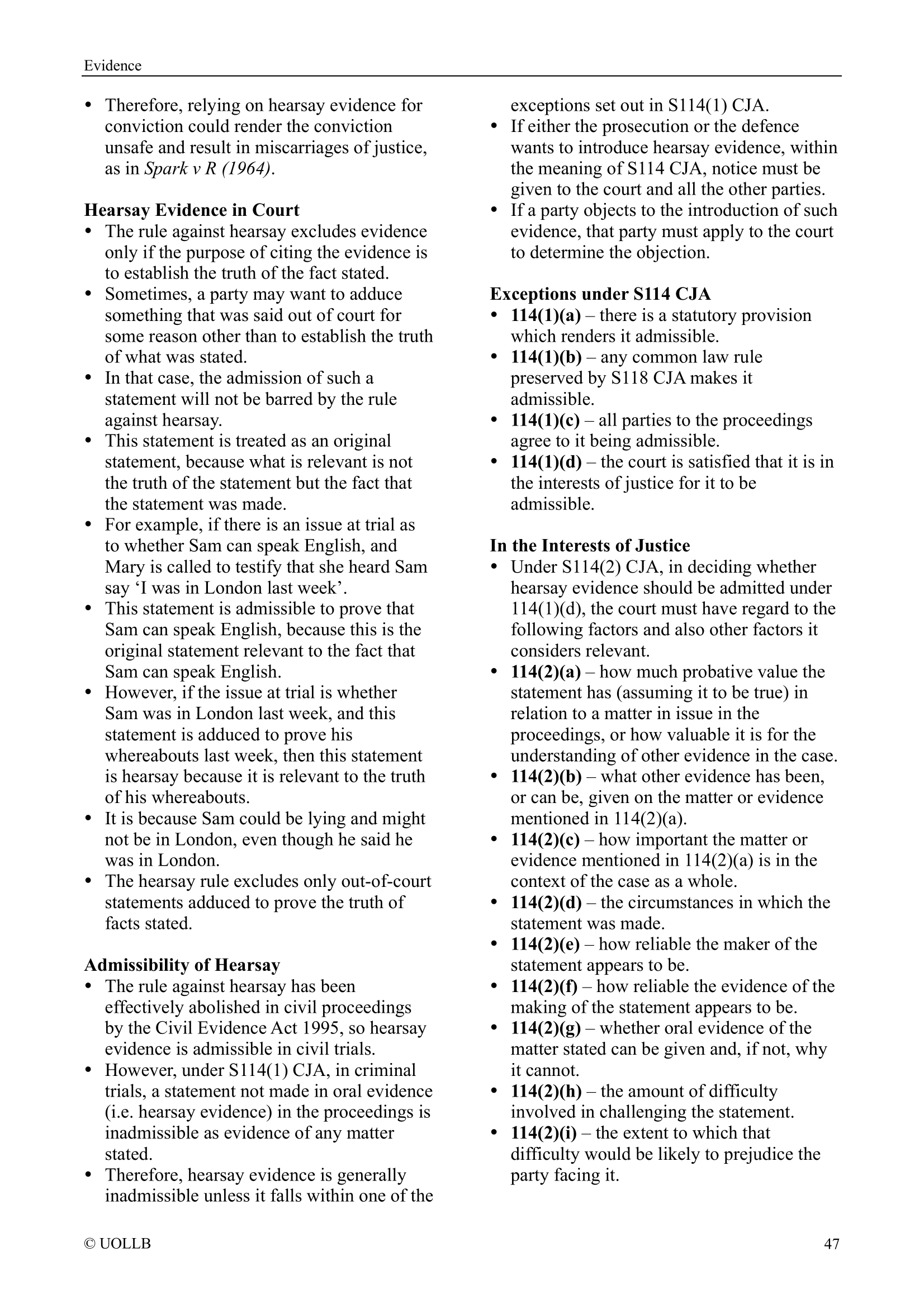
Lord Bingham delivered the leading judgment. The House of Lords rejected the challenge and upheld the validity of the Parliament Act 1949 and, consequently, the Hunting Act 2004.
The case is an important constitutional authority on the Parliament Acts, the relationship between the House of Commons and House of Lords, and the constitutional limits of parliamentary legislative procedures. Lord Bingham also addressed the extent to which courts can examine the validity of legislation.
10. R v Davis [2008] UKHL 36
Iain Davis was convicted of two murders. Three witnesses who identified him as the gunman were permitted to give evidence anonymously because they feared for their safety. Their identities and personal details were withheld from the defendant and his legal representatives.
Lord Bingham delivered the leading judgment. The House of Lords unanimously allowed the appeal, holding that the extensive restrictions on the identification and cross-examination of the witnesses were incompatible with the defendant's right to a fair trial.
The case reaffirmed the importance of the defendant's right to know and challenge the evidence given by prosecution witnesses. It is a leading authority on the right to confront witnesses and Article 6 of the European Convention on Human Rights.