Top 10 Cases Decided by Lord Diplock
Share
Lord Diplock (1907–1985) was one of the most influential British judges of the 20th century. He served as a Lord Justice of Appeal before becoming a Lord of Appeal in Ordinary in 1968. He made significant contributions to English law, particularly in contract law, tort law, equity and trusts, company law, criminal law and administrative law.
His judgments are recognised for their analytical precision and their influence on the development of legal principles. We have selected 10 of his most important cases, covering several major areas of English law.
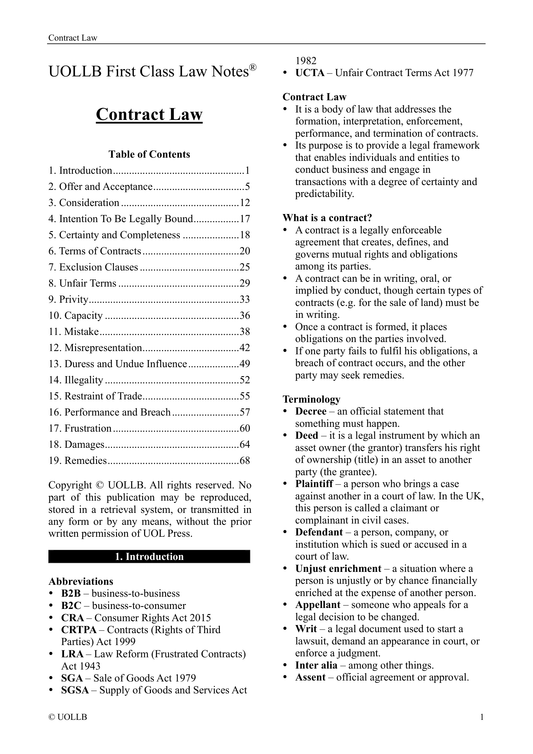
1. Hong Kong Fir Shipping Co Ltd v Kawasaki Kisen Kaisha Ltd [1962] 2 QB 26
Kawasaki Kisen Kaisha Ltd chartered a ship, the Hong Kong Fir, from its owners for a period of 24 months. The charterparty required the ship to be seaworthy and properly equipped. However, the ship suffered from mechanical defects and inadequate engine-room personnel, resulting in substantial delays. The charterers sought to terminate the contract, arguing that the shipowners had breached their contractual obligations.
Lord Diplock, sitting in the Court of Appeal, held that the breach did not automatically entitle the charterers to terminate the contract. Instead, the court had to consider the consequences of the breach and whether they deprived the innocent party of substantially the whole benefit of the contract. As the charterers had still received substantial benefits under the agreement, they were not entitled to terminate it.
The case established the concept of innominate terms in contract law. It demonstrated that the consequences of a breach, rather than simply the classification of a contractual term as a condition or warranty, could determine whether the innocent party was entitled to terminate the contract.
2. Gissing v Gissing [1971] AC 886
Mr and Mrs Gissing purchased a matrimonial home in the husband's sole name. Although Mrs Gissing contributed towards household expenses and carried out domestic responsibilities, there was a dispute over whether she had acquired a beneficial interest in the property. Following their separation, she claimed that she was entitled to a share of the matrimonial home.
Lord Diplock held that a beneficial interest under a resulting or constructive trust could arise where there was evidence of an agreement, arrangement or understanding between the parties, together with conduct demonstrating a common intention to share ownership. However, the wife's contributions to household expenses and domestic responsibilities were insufficient, by themselves, to establish such an interest.
The case became an important authority on the acquisition of beneficial interests in family homes. It contributed to the development of the common intention constructive trust and the principles governing beneficial ownership where legal title is held in one person's name.
3. American Cyanamid Co v Ethicon Ltd [1975] AC 396
American Cyanamid Co held a patent relating to surgical sutures and alleged that Ethicon Ltd had infringed its patent by manufacturing and selling competing products. American Cyanamid applied for an interlocutory injunction to prevent Ethicon from continuing its activities while the substantive proceedings were being determined.
Lord Diplock established a structured approach to applications for interlocutory injunctions. He held that the applicant first had to demonstrate that there was a serious question to be tried. The court should then consider whether damages would provide an adequate remedy and assess the balance of convenience, including which party would suffer greater harm if the injunction were granted or refused.
The case established the American Cyanamid guidelines, which remain a fundamental authority on interim injunctions in English civil litigation. It replaced the previous emphasis on establishing a strong prima facie case with a more flexible assessment of the relevant circumstances.
4. Erven Warnink BV v J Townend & Sons (Hull) Ltd [1979] AC 731
Erven Warnink BV manufactured a traditional Dutch alcoholic drink known as advocaat, which was made using eggs, sugar and alcohol. J Townend & Sons began selling a similar product under the description of advocaat, although its product contained different ingredients and was manufactured using a different process. Warnink argued that Townend's conduct amounted to passing off.
Lord Diplock recognised that an action for passing off could protect the goodwill associated with a particular product and its established description, even where there was no direct misrepresentation that the defendant's goods came from the claimant. He identified essential elements of the action, including a misrepresentation, made in the course of trade, which caused or was likely to cause damage to the goodwill of another trader.
The case significantly developed the law of passing off by recognising protection for the goodwill attached to descriptions of products. It became an important authority on extended passing off, particularly where a product has acquired a distinctive reputation associated with its name or description.
5. Ong Ah Chuan v Public Prosecutor [1981] AC 648
The appellants were convicted of drug trafficking offences in Singapore and challenged the constitutionality of provisions imposing mandatory capital punishment for certain drug offences. They argued that the mandatory death penalty was inconsistent with constitutional protections, particularly the right to life and the requirement that criminal punishment be imposed in accordance with law.
Lord Diplock, delivering the judgment of the Privy Council, considered the meaning of the constitutional protection of life and personal liberty. He held that a law providing for the mandatory death penalty did not necessarily violate the constitutional requirement of fundamental justice merely because it restricted judicial discretion in sentencing.
The case became an important authority on constitutional interpretation and the meaning of the expression 'in accordance with law'. It also examined the relationship between constitutional rights, criminal legislation and the validity of mandatory sentences.
6. Catnic Components Ltd v Hill & Smith Ltd [1982] RPC 183
Catnic Components Ltd owned a patent relating to a steel lintel used in building construction. Hill & Smith Ltd manufactured a similar product, but one component differed slightly from the precise dimensions described in the patent. Catnic argued that the competing product infringed its patent, while Hill & Smith maintained that it fell outside the patent's claims.
Lord Diplock rejected an excessively literal approach to interpreting patent claims. He held that the court should consider whether a person skilled in the relevant technical field would understand that strict compliance with the particular wording was essential to the invention. A minor departure from the specified dimensions did not necessarily avoid infringement.
The case established the purposive approach to interpreting patent claims, moving away from an excessively technical and literal interpretation. It became a leading authority in patent law and influenced the later development of the doctrine of equivalents.
7. Universe Tankships Inc of Monrovia v International Transport Workers' Federation [1983] 1 AC 366
The owners of a vessel, the Universe Sentinel, faced industrial action organised by the International Transport Workers' Federation (ITF). The ITF sought to secure payment of wages and other benefits for the vessel's crew. The shipowners eventually made a payment to obtain the release of the vessel, but subsequently argued that the payment had been obtained through economic duress.
Lord Diplock held that economic duress could render an agreement or payment voidable where illegitimate pressure was applied and the victim had no practical alternative but to comply. He recognised that the pressure exercised by the ITF was unlawful and that the shipowners had made the payment under duress.
The case established an important principle concerning economic duress in contract law. It confirmed that illegitimate economic pressure could undermine the voluntary nature of consent and provide grounds for recovering money paid under duress.
8. R v Miller [1983] 2 AC 161
The defendant accidentally started a fire in a house after falling asleep while smoking a cigarette. Rather than attempting to extinguish the fire or alerting anyone, he moved into another room and went to sleep. The fire subsequently spread, causing substantial damage to the property. He was charged with arson.
Lord Diplock held that a person who accidentally creates a dangerous situation may acquire a legal duty to take reasonable steps to prevent the resulting harm. Where the defendant becomes aware of the danger but deliberately fails to act, that omission may constitute the actus reus of a criminal offence.
The case established an important principle concerning criminal liability for omissions. It demonstrated that a person who creates a dangerous situation can be under a duty to take reasonable steps to prevent harm, even where the original creation of the danger was entirely accidental.
9. O'Reilly v Mackman [1983] 2 AC 237
Several prisoners challenged disciplinary decisions made by prison authorities, arguing that the decisions were invalid because the authorities had failed to comply with the requirements of natural justice. Rather than using the prescribed judicial review procedure, the prisoners brought ordinary civil proceedings.
Lord Diplock held that where a person sought to challenge a decision made by a public authority on public law grounds, the appropriate procedure was generally an application for judicial review. Bringing ordinary civil proceedings in circumstances where judicial review was the proper procedure could amount to an abuse of the court's process.
The case established the principle of procedural exclusivity in judicial review, commonly known as the O'Reilly v Mackman principle. It became a fundamental authority in administrative law concerning the distinction between public law and private law proceedings, although subsequent cases have recognised exceptions to the principle.
10. Council of Civil Service Unions v Minister for the Civil Service [1985] AC 374
The government decided to prohibit employees at the Government Communications Headquarters (GCHQ) from joining trade unions on national security grounds. The decision was made without prior consultation with the employees or their trade unions. The Council of Civil Service Unions challenged the decision, arguing that the employees had a legitimate expectation that consultation would take place.
Lord Diplock recognised three principal grounds upon which the exercise of public powers could be reviewed by the courts: illegality, irrationality and procedural impropriety. He also accepted that legitimate expectations could arise from established practices or representations made by public authorities. However, he concluded that national security considerations justified the government's decision not to consult the employees.
The case became one of the most important authorities in modern administrative law. It established a widely recognised framework for judicial review and confirmed that the exercise of prerogative powers was generally subject to judicial review, provided the subject matter was suitable for judicial scrutiny.