Top 10 Cases Decided by Lord Hoffmann
Share
Lord Hoffmann (born 1934) is one of the most influential British judges of the modern era. He served as a Lord of Appeal in Ordinary from 1995 until his retirement in 2009. His judgments have made significant contributions to contract law, company law, equity and trusts, tort law, intellectual property and constitutional law.
Lord Hoffmann is particularly recognised for his approach to contractual interpretation, the development of equitable principles and his influential judgments on the limits of governmental power. We have selected 10 of his most important cases, covering several major areas of English law.
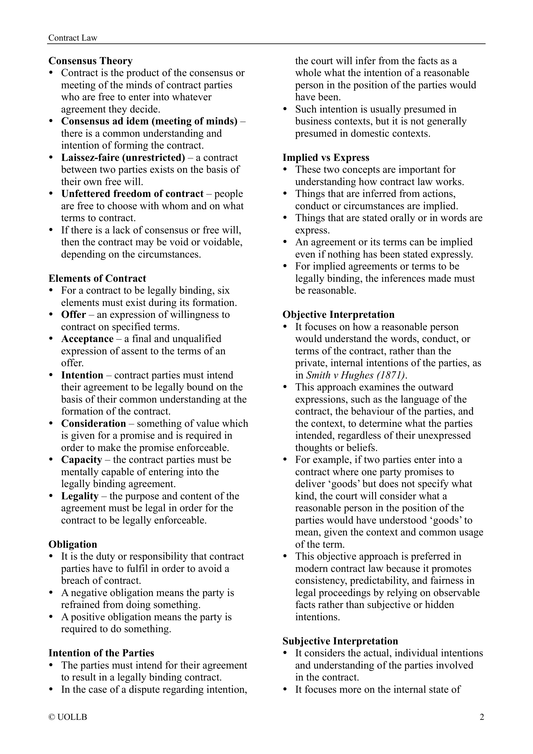
1. Investors Compensation Scheme Ltd v West Bromwich Building Society [1998] 1 WLR 896
The Investors Compensation Scheme (ICS) was established to compensate investors who had suffered financial losses as a result of negligent investment advice. Following the payment of compensation to investors who had entered into home income plans, ICS sought to recover their claims against the financial advisers and other parties. A dispute arose over the interpretation of the documents transferring those claims to ICS.
Lord Hoffmann established five principles of contractual interpretation. He explained that a contract should be interpreted by considering what a reasonable person, possessing the relevant background knowledge available to the parties, would have understood the language to mean. He also emphasised that the meaning of contractual language must be considered in its relevant factual and commercial context.
The case became a landmark authority on contractual interpretation and established what is commonly known as the contextual approach. Lord Hoffmann's five principles significantly influenced English contract law and remain central to the interpretation of commercial agreements.
2. South Australia Asset Management Corporation v York Montague Ltd [1997] AC 191
South Australia Asset Management Corporation (SAAMCO) and other lenders brought claims against professional valuers who had negligently overvalued properties used as security for loans. The lenders argued that, had the properties been valued correctly, they would not have advanced the money. Following a subsequent fall in the property market, the lenders suffered substantial financial losses and sought to recover the full amount from the valuers.
Lord Hoffmann held that a professional adviser should generally only be liable for losses falling within the scope of the duty of care undertaken. A valuer who negligently provides an incorrect valuation is responsible for losses attributable to that incorrect valuation, but is not automatically responsible for every loss arising from the lending transaction.
The case established the SAAMCO principle, an important development in the law of negligence and professional liability. It clarified the distinction between factual causation and the scope of a defendant's responsibility for particular losses.
3. Co-operative Insurance Society Ltd v Argyll Stores (Holdings) Ltd [1998] AC 1
Co-operative Insurance Society Ltd (CIS) owned a shopping centre and leased premises to Argyll Stores, which operated a supermarket. The lease contained a covenant requiring Argyll Stores to keep the supermarket open during normal business hours. Argyll Stores subsequently closed the supermarket because it was operating at a loss. CIS sought an order for specific performance requiring the company to reopen and continue operating the supermarket.
Lord Hoffmann held that specific performance should not be granted. He explained that an order requiring a business to continue operating would create significant practical difficulties for the court, which would have to supervise compliance with the order. It could also force a company to continue trading at a substantial financial loss.
The case established important principles concerning the discretionary nature of specific performance. It demonstrated that courts will generally be reluctant to order a party to continue carrying on a business, particularly where compliance would require continuous judicial supervision and could result in substantial financial losses.
4. R v Secretary of State for the Home Department, ex parte Simms [2000] 2 AC 115
Two prisoners serving life sentences for murder wished to speak to journalists who were investigating their claims of wrongful convictions. However, prison authorities imposed restrictions preventing journalists from publishing information obtained during oral interviews with prisoners. The prisoners challenged the policy, arguing that it unlawfully restricted their freedom of expression and their ability to obtain assistance in investigating possible miscarriages of justice.
Lord Hoffmann upheld the prisoners' appeals and explained the principle of legality. He held that fundamental rights cannot be overridden by general or ambiguous statutory language. If Parliament intends to restrict fundamental rights, it must make that intention sufficiently clear. The courts should not assume that Parliament intended to interfere with fundamental rights through broad or unclear wording.
The case established one of the leading statements of the principle of legality in English constitutional law. It demonstrates how courts can protect fundamental rights through statutory interpretation while recognising the sovereignty of Parliament.
5. O'Neill v Phillips [1999] 1 WLR 1092
Mr O'Neill worked for a company owned and controlled by Mr Phillips. Following a period of successful business activity, Mr O'Neill was appointed managing director and was given an expectation that he would eventually acquire a substantial shareholding in the company. However, disagreements subsequently arose between the parties, and Mr Phillips refused to transfer the additional shares. Mr O'Neill brought an unfair prejudice petition under the Companies Act 1985.
Lord Hoffmann held that the conduct complained of was not necessarily unfairly prejudicial merely because it frustrated Mr O'Neill's expectations. He explained that unfairness had to be assessed by reference to the legal rights of the shareholders and any additional equitable considerations arising from agreements, understandings or established practices between them.
The case became a leading authority on unfair prejudice petitions under company law. It clarified the relationship between legal rights, equitable considerations and legitimate expectations when determining whether the affairs of a company have been conducted unfairly prejudicially to a shareholder.
6. Bruton v London & Quadrant Housing Trust [2000] 1 AC 406
London & Quadrant Housing Trust occupied a block of flats under a licence granted by Lambeth London Borough Council. The Trust subsequently granted Mr Bruton permission to occupy one of the flats under an agreement described as a licence. Mr Bruton argued that the agreement actually created a tenancy because he had exclusive possession of the property. This distinction was important because tenants enjoyed statutory protection under the Landlord and Tenant Act 1985.
Lord Hoffmann held that the agreement created a tenancy despite being described as a licence. The essential question was whether the arrangement gave Mr Bruton exclusive possession for a term. The fact that the Trust itself only held a licence from the local authority did not prevent it from creating a tenancy in its contractual relationship with Mr Bruton.
The case established the principle commonly known as the Bruton tenancy. It demonstrated that the legal character of an occupation agreement depends on its substantive characteristics rather than the terminology used by the parties. It also highlighted the distinction between a tenancy creating contractual rights between the parties and a proprietary lease binding third parties.
7. A v Secretary of State for the Home Department [2005] 2 AC 68
Following the terrorist attacks of 11 September 2001, the UK government introduced legislation allowing the indefinite detention of certain foreign nationals suspected of involvement in international terrorism. Several individuals were detained at Belmarsh Prison without criminal charges or trial. They challenged the legality of their detention, arguing that the measures violated their fundamental rights under the European Convention on Human Rights.
Lord Hoffmann agreed with the majority that the detention arrangements were incompatible with the Human Rights Act 1998, but went further in his reasoning. In a powerful dissenting opinion on the question of derogation, he argued that the threat of international terrorism did not constitute a threat to the life of the nation in the constitutional sense required to justify the government's measures. He famously observed that the real threat to the life of the nation came not from terrorism but from laws of this kind.
The case became a landmark decision on human rights, national security and the limits of executive power. Lord Hoffmann's dissent remains particularly influential in constitutional discussions about the protection of fundamental rights during national emergencies.
8. Jameel v Wall Street Journal Europe SPRL [2007] 1 AC 359
The Wall Street Journal Europe published an article reporting that Saudi authorities were monitoring bank accounts connected with prominent Saudi individuals to prevent funds from reaching terrorist organisations. Mr Jameel, a Saudi businessman whose interests were mentioned in the article, brought a defamation action against the newspaper. The newspaper relied on the defence of qualified privilege based on responsible journalism, following the principles developed in Reynolds v Times Newspapers Ltd (2001).
Lord Hoffmann supported the newspaper's appeal and emphasised the importance of protecting responsible journalism on matters of genuine public interest. He criticised an excessively restrictive application of the Reynolds defence and stressed that courts should assess the publication as a whole, rather than impose unrealistic requirements on journalists to verify every detail in advance.
The case became a leading authority on freedom of expression and the defence of responsible journalism in defamation law. It reinforced the importance of allowing the media to report matters of public interest without exposing publishers to unnecessary restrictions through excessively demanding legal requirements.
9. OBG Ltd v Allan [2008] 1 AC 1
This case involved three appeals concerning economic torts. In the principal appeal, receivers were appointed under a floating charge that was subsequently found to be invalid. Acting in good faith, they took control of the company's assets and business. OBG Ltd brought proceedings alleging, among other things, unlawful interference with its contractual relations. The other appeals raised questions concerning the torts of inducing breach of contract and causing loss by unlawful means.
Lord Hoffmann delivered an important judgment clarifying the principles governing economic torts. He distinguished between inducing a breach of contract and causing loss by unlawful means. He explained that the latter generally requires intentional interference with a third party's freedom to deal with the claimant through unlawful conduct that is actionable by that third party.
The case became a landmark authority on economic torts and the protection of commercial interests. It clarified the requirements for establishing liability for unlawful interference and inducing breach of contract, helping to define the boundaries of liability for intentional economic harm.
10. Transfield Shipping Inc v Mercator Shipping Inc (The Achilleas) [2009] 1 AC 61
Transfield Shipping Inc chartered a vessel known as the Achilleas from Mercator Shipping Inc. The charterers returned the vessel late, causing the owners to miss a subsequent charterparty agreed with another customer. During the delay, market rates had fallen substantially, and the owners were forced to renegotiate the subsequent charter at a lower rate. They sought to recover the resulting loss of profits from the original charterers.
Lord Hoffmann held that the charterers were not liable for the full loss suffered under the subsequent charter. He emphasised that contractual liability for damages depended not only on foreseeability but also on the losses the parties could reasonably be understood to have assumed responsibility for when entering into the contract. In the circumstances, the charterers had not assumed responsibility for the substantial loss arising from the subsequent fixture.
The case became an important authority on remoteness of damage in contract law. It developed the traditional approach associated with Hadley v Baxendale (1854) by emphasising the importance of the parties' assumed responsibility when determining the recoverability of contractual losses.