Presumptions in Statutory Interpretation
Share
A presumption in statutory interpretation is a rebuttable assumption applied by courts about what Parliament is taken to have intended when enacting legislation, used to guide interpretation where statutory wording is ambiguous or open to more than one meaning.
These presumptions reflect fundamental legal and constitutional values but may be displaced by express statutory language or necessary implication. In the absence of such clarity it operates as a default interpretative tool to ensure legislation is read consistently with established legal norms and parliamentary intent.
There is no fixed or closed number of presumptions in statutory interpretation as they are judge-made principles, not a codified list, so their number is inherently flexible. Courts recognise a core group of well-established presumptions but additional presumptions exist and continue to develop through case law. The following is a list of well-established presumptions.
1. Principle of legality (presumption in favour of fundamental rights)
Parliament is presumed not to intend to interfere with fundamental rights or constitutional principles unless it uses clear and express language. Courts therefore interpret general or ambiguous statutory wording so as to avoid infringing rights such as personal liberty, access to the courts, property rights, and natural justice.
2. Presumption against ousting the jurisdiction of the courts
It is presumed that Parliament does not intend to exclude or restrict judicial oversight, particularly judicial review, unless it does so in the clearest possible terms. Ouster clauses are interpreted narrowly, and ambiguous wording will not be treated as removing the courts’ supervisory role. This protects the constitutional principle that executive power is subject to legal control.
3. Presumption of compatibility with human rights
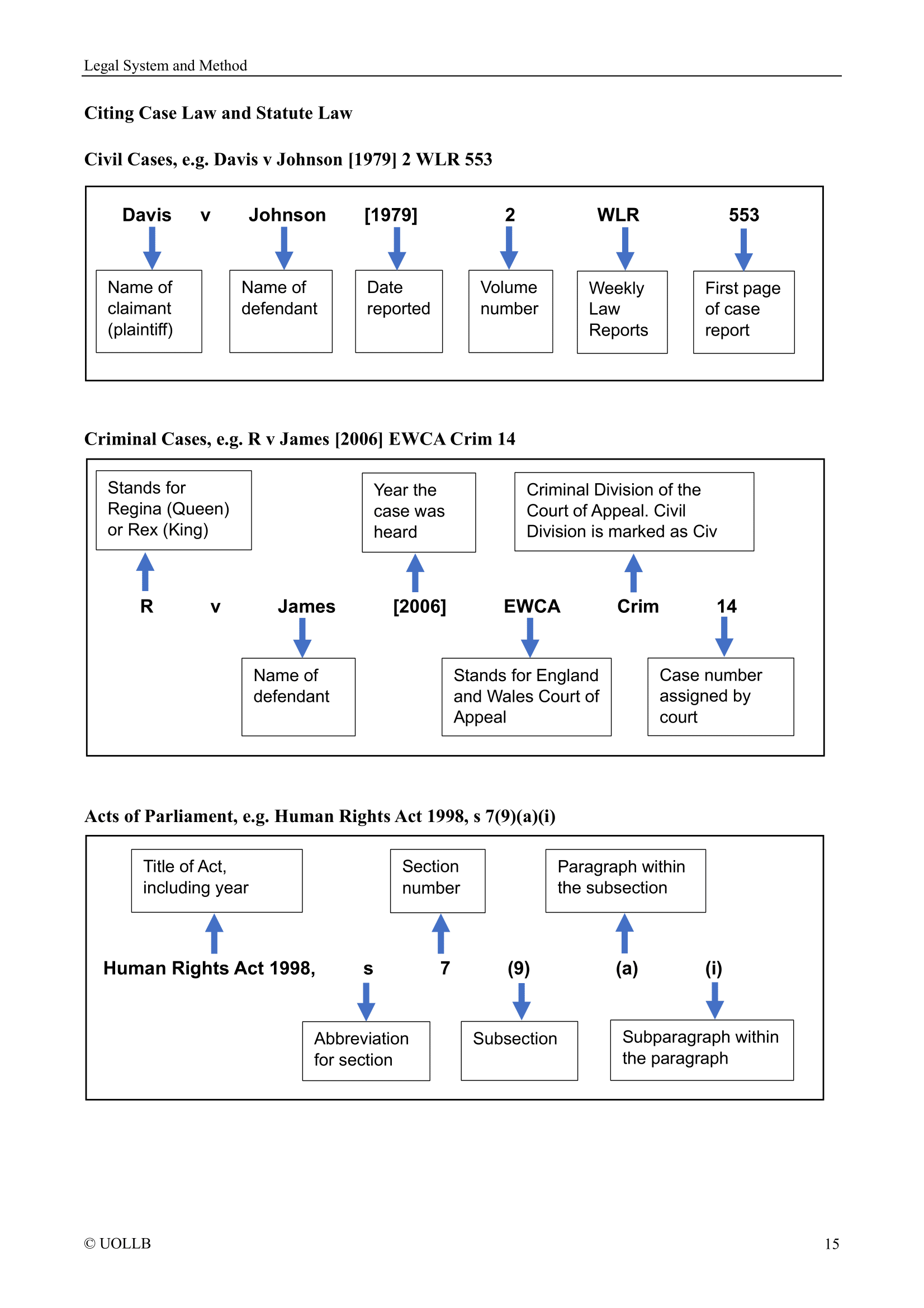
Under section 3 of the Human Rights Act 1998, courts presume that Parliament intends legislation to be compatible with Convention rights. Statutes must therefore be read and given effect, so far as possible, in a way that is consistent with human rights. This presumption reinforces rights-respecting interpretation without undermining parliamentary sovereignty.
4. Presumption against breach of international law
Courts presume that Parliament does not intend to legislate in breach of the UK’s international obligations, including treaty commitments. Where statutory language is ambiguous, it will be interpreted in a way that conforms to international law. However, this presumption can be displaced by clear wording showing Parliament intended to depart from international obligations.
5. Presumption against retrospectivity
Legislation is presumed not to operate retrospectively, meaning it does not affect past events, liabilities, or vested rights unless Parliament clearly indicates otherwise. This protects fairness and legal certainty by ensuring people can rely on the law as it stood at the time they acted. Retrospective effect requires express language or necessary implication.
6. Always speaking principle
Statutes are presumed to be 'always speaking', meaning they apply to modern conditions and new circumstances that arise after enactment. Courts interpret statutory language dynamically so it remains effective over time, provided the interpretation stays within the natural meaning and purpose of the statute. This prevents legislation from becoming obsolete due to social or technological change.
7. Presumption that the Crown is not bound
The Crown is presumed not to be bound by statute unless the statute expressly states so or binds the Crown by necessary implication. This reflects historical constitutional principles and means that government departments and Crown servants are not subject to legislation by default. Modern statutes often displace this presumption expressly.
8. Presumption of mens rea in criminal offences
In criminal law, Parliament is presumed to intend that offences require mens rea (a guilty mind) unless clearly excluded, for example in strict liability crimes. Courts therefore read mental elements such as intention, knowledge, or recklessness into offences where the statute is silent. This avoids criminalising morally innocent conduct and reflects principles of fairness and culpability.
9. Strict construction of penal statutes
Statutes imposing criminal liability or penalties are interpreted strictly in favour of the defendant where there is ambiguity. If Parliament intends to create criminal liability or impose punishment, it must do so clearly. This presumption protects liberty and ensures individuals are not punished under uncertain or unclear law.
10. Presumption of ordinary and grammatical meaning
Words in a statute are presumed to bear their ordinary, natural, and grammatical meaning, unless context or purpose indicates otherwise. Courts assume Parliament chose words deliberately and intended them to be understood in their usual sense. This presumption underpins the literal approach to interpretation.
11. Presumption against surplusage
Every word and provision in a statute is presumed to have meaning and effect. Courts avoid interpretations that render words redundant or meaningless, assuming Parliament does not legislate unnecessarily. Each part of the statute should contribute to its overall operation.
12. Presumption of consistent usage
Where the same word or phrase appears repeatedly in a statute, it is presumed to have the same meaning throughout, unless context requires otherwise. Conversely, where different words are used, it is presumed that different meanings were intended. This promotes internal coherence in statutory drafting.
13. Presumption that “include” is non-exhaustive
Where statutory wording uses 'include', it is presumed to introduce illustrative examples rather than an exhaustive list, unless the context suggests otherwise. This allows statutory categories to remain flexible and prevents overly narrow interpretation.
14. Presumption against change in the common law
Parliament is presumed not to alter the common law more than is necessary. If a statute is capable of two interpretations, courts prefer the one that leaves existing common law principles intact. Clear wording is required to abolish or fundamentally change common law rules.
15. Presumption of constitutionality
Statutes are presumed to be constitutional and legally valid, and courts avoid interpretations that would place legislation in conflict with constitutional principles or fundamental norms. This supports coherence within the legal system and respects Parliament’s role as a constitutional actor.
16. Presumption against implied repeal (especially of constitutional statutes)
Parliament is presumed not to repeal earlier legislation by implication, particularly constitutional statutes, unless the later statute clearly and unavoidably conflicts with the earlier one. Courts strive to read statutes together harmoniously wherever possible.
17. Presumption that statutes fit within the existing legal framework
New legislation is presumed to operate coherently with existing law, values, and legal structures. Courts assume Parliament legislates with awareness of the current legal landscape and does not intend hidden disruption without clear expression.
18. Presumption against absurdity or injustice
Courts presume that Parliament does not intend absurd, unreasonable, or manifestly unjust outcomes. Where statutory wording is ambiguous, interpretations leading to sensible and fair results are preferred. However, if the language is clear, it must generally be applied even if the outcome is harsh, unless the absurdity defeats the statute’s purpose.
19. Presumption against expropriation without compensation
Parliament is presumed not to deprive individuals of property without compensation unless this intention is clearly expressed. Interference with proprietary rights is therefore interpreted narrowly, protecting property as a fundamental legal interest.
20. Strict construction of taxing statutes
In cases of ambiguity, taxing provisions are interpreted in favour of the taxpayer and against the revenue authority. Parliament must clearly impose tax liabilities, and courts will not extend taxation by implication. This reflects the principle that taxation requires clear legal authority.
21. Purposive presumption
Statutes are presumed to be enacted to achieve a coherent legislative purpose, and courts interpret provisions in a way that furthers the statute’s overall scheme. This presumption supports purposive interpretation, especially where literal meaning would undermine legislative intent.
22. Presumption of reasonable and proportionate legislation
Parliament is presumed to legislate reasonably and proportionately, intending balanced and rational outcomes consistent with justice and fairness. Courts therefore resist interpretations that produce arbitrary or excessive results unless clearly required by the statutory text.