Why an Overseas Common Law LLB Can Be a Faster, Cheaper Path to Becoming a US Attorney
Share
The traditional route into the American legal profession is well known. Four years of undergraduate study followed by three years of law school, seven years total, often at a combined cost that can exceed $500,000 once tuition, housing, and lost income are factored in. But this is not the only road available. If you are willing to study a common law LLB overseas, there is a shorter and less expensive path that leads to the same destination, a license to practice law in the United States.
The Traditional US Path Is Long and Expensive
In the United States, becoming a lawyer almost always means completing a four year bachelor's degree in any subject, followed by a three year Juris Doctor programme at an ABA accredited law school. That is seven years of higher education before you are eligible to sit a bar exam. Tuition at many law schools now runs well above $75,000 a year, and that figure does not include undergraduate costs, living expenses, or the opportunity cost of years spent out of the workforce.
The Overseas LLB Alternative
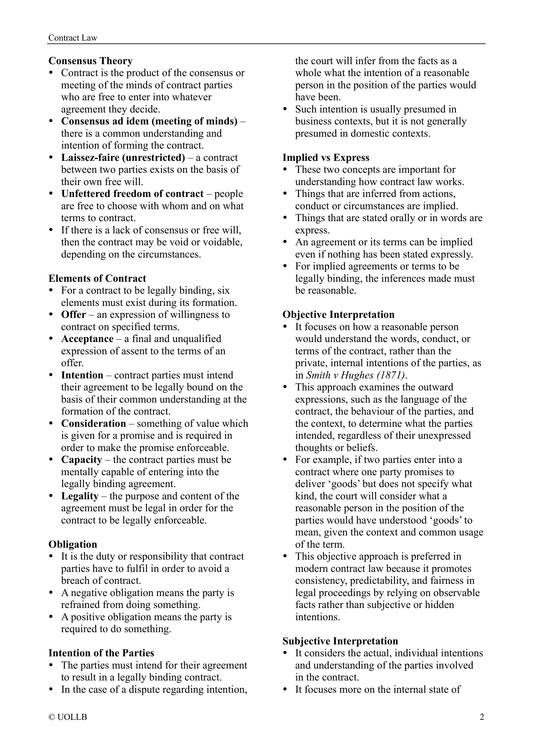
Several common law countries, including England & Wales, Ireland, Northern Ireland, Australia, New Zealand, Singapore, and Hong Kong, offer an LLB as an undergraduate degree, typically completed in three or four years straight out of secondary school. There is no separate bachelor's degree required first. A student can begin studying law immediately after high school and finish with a full law degree at roughly the same age an American student would still be finishing their undergraduate degree in an unrelated subject.
A number of US jurisdictions recognise this kind of common law legal education as substantively equivalent to a JD for bar admission purposes. Jurisdictions including New York, California, the District of Columbia, Maryland, Georgia, Massachusetts, Illinois, and Texas allow foreign trained lawyers to sit for the bar exam without first earning a JD from a US law school.
| US Jurisdiction | Foreign Law Graduates Eligible? |
|---|---|
| Alabama | Yes |
| Alaska | Yes |
| Arizona | No |
| Arkansas | No |
| California | Yes |
| Colorado | Yes |
| Connecticut | Yes |
| Delaware | Yes |
| District of Columbia | Yes |
| Florida | Yes |
| Georgia | Yes |
| Hawaii | Yes |
| Idaho | No |
| Illinois | Yes |
| Indiana | Yes |
| Iowa | No |
| Kansas | No |
| Kentucky | No |
| Louisiana | No |
| Maine | Yes |
| Maryland | Yes |
| Massachusetts | Yes |
| Michigan | Yes |
| Minnesota | Yes |
| Mississippi | No |
| Missouri | Yes |
| Montana | No |
| Nebraska | No |
| Nevada | No |
| New Hampshire | Yes |
| New Jersey | Yes |
| New Mexico | Yes |
| New York | Yes |
| North Carolina | No |
| North Dakota | No |
| Ohio | Yes |
| Oklahoma | No |
| Oregon | Yes |
| Pennsylvania | No |
| Rhode Island | No |
| South Carolina | No |
| South Dakota | No |
| Tennessee | No |
| Texas | Yes |
| Utah | Yes |
| Vermont | Yes |
| Virginia | No |
| Washington | Yes |
| West Virginia | No |
| Wisconsin | No |
| Wyoming | No |
New York is generally considered the most accessible of these jurisdictions. Degrees from several common law countries, including England, Ireland, Australia, Hong Kong, Israel, Nigeria, and New Zealand, are often treated as substantively equivalent to a US JD, provided the degree also meets certain duration requirements. Some candidates from these backgrounds can sit for the New York bar exam on the strength of their first law degree alone, without any further US coursework.
| Foreign Jurisdiction | Typical LLB Duration |
|---|---|
| England and Wales | 3 years |
| Northern Ireland | 3 years |
| Ireland | 3 to 4 years |
| Australia | 4 years |
| New Zealand | 4 years |
| Hong Kong | 4 years |
| Singapore | 4 years |
| Nigeria | 5 years |
| Ghana | 4 years |
| Kenya | 4 years |
| Jamaica | 3 years |
| Bahamas | 3 years |
| Barbados | 3 years |
| Trinidad & Tobago | 3 years |
| Israel | 3.5 years |
Why This Path Can Save Time and Money
The math is straightforward. A three-year overseas LLB obtained from a British university replaces both the four year US bachelor's degree and the three year JD, cutting total schooling time by more than half. Tuition at many overseas law schools, particularly outside the most elite programmes, is a fraction of US law school tuition. Even when you need to add a one year LLM to satisfy specific state requirements, the combined LLB plus LLM timeline of four years is still shorter than the traditional seven year US route, and often considerably cheaper.
The Catch Most People Overlook
This path is not automatic, and it is not available everywhere. Eligibility depends heavily on which state a person intends to practice in, which country and school the LLB comes from, and how that state's bar examiners evaluate the degree. Most states require a JD degree from a US law school in order to sit for the bar exam, and only a limited number of states, including New York, California, New Hampshire, Alabama, and Virginia, allow foreign law graduates to sit for the exam at all.
Even within the friendlier states, the process is not simple. Foreign law graduates typically need to go through a credential equivalency evaluation, and this process can take up to a year, reviewing coursework, credit hours, and the underlying legal system. Many candidates whose LLB is not judged fully equivalent will still be required to complete an LLM at an ABA accredited school before they qualify to sit for the exam, which adds back some of the time and cost the shorter path was meant to save.
There are also practical downstream effects worth weighing. A degree from a state that recognises foreign LLBs does not automatically transfer to a state that does not, since bar admission in the US is governed jurisdiction by jurisdiction rather than nationally. Career mobility across state lines can be more complicated for attorneys who did not attend a US law school, and some employers, particularly large law firms, weight the JD credential heavily in hiring decisions regardless of bar passage.
Who This Path Makes Sense For
This route tends to make the most sense for students who already know they want to build a career centred on a jurisdiction like New York or California, who are drawn to the lower cost and shorter timeline of a common law LLB, and who are prepared to research the specific admission rules of their target state well before they begin their studies. It is less well suited to someone who wants maximum flexibility to work at a large US firm straight out of school or who has not yet decided which state they want to practice in.
The seven-year, two-degree American path to becoming an attorney is the default, but it is not the only legitimate route. For students who plan carefully, choose the right country and school for their LLB, and target a bar admitting jurisdiction like New York or California, an overseas common law LLB can shave years and hundreds of thousands of dollars off the road to becoming a licensed US attorney. The tradeoff is added complexity, jurisdiction specific rules, and a credential evaluation process that requires patience and careful planning well in advance. Anyone seriously considering this path should confirm the current requirements directly with the bar examiners of the state they intend to practice in, since these rules can and do change.